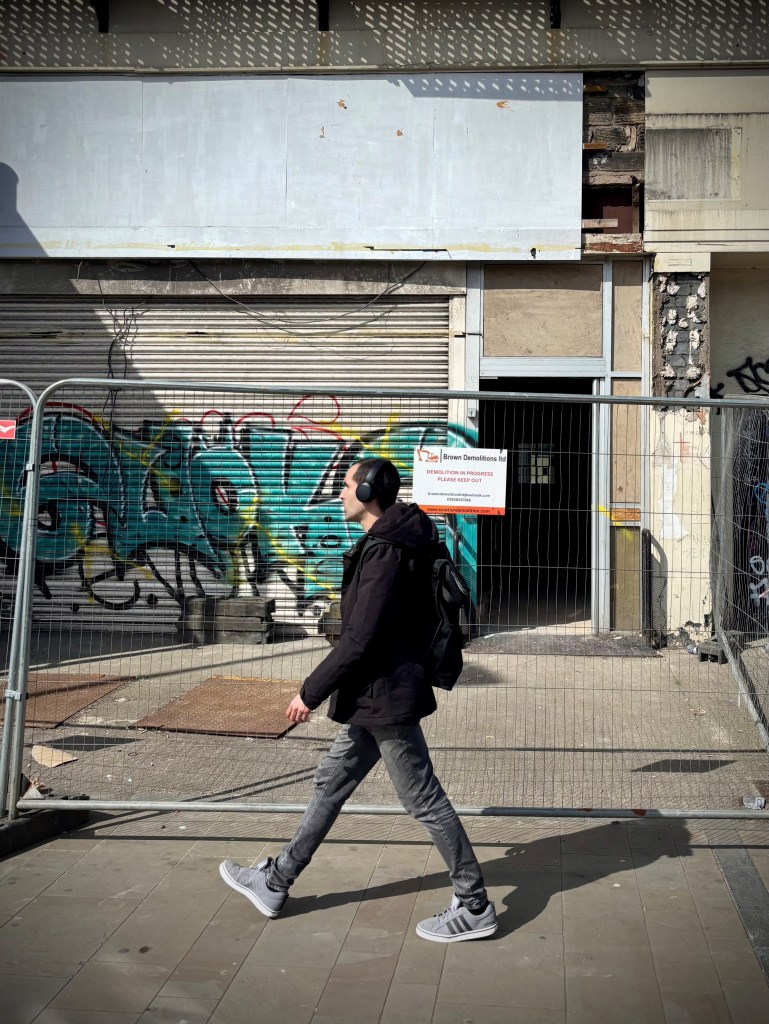
10 Picardy Place—built as a townhouse in the early 1800s, part of a terrace that replaced a village of French weavers who had been invited to Edinburgh in the previous century in the hope that the district would become a centre of the linen industry. (It appears it did not.)
For nearly a century, the building has been given over to cars: 50 years as a Hertz rental office; before that a Fiat dealership; and before that the Dunedin Garage and Service Station—likely Edinburgh’s first multi-storey car park.
Former residents and owners include:
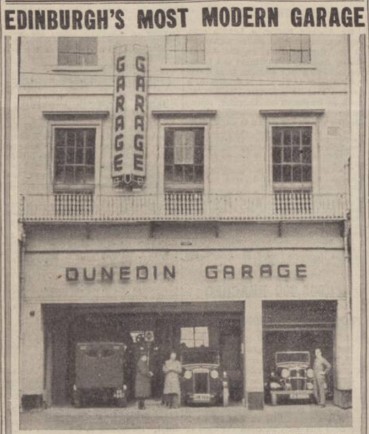
1935—R T Duncan, who opened the Dunedin Garage after his family business—the Leith-based chocolatiers Duncan of Edinburgh, inventors of the Walnut Whip—was sold to Rowntree’s.
The garage housed 200 cars over five storeys (served by electric lifts) and was “a great boon … as cars can be left under cover for a small charge, which is preferable to leaving them in the open.” A modern marvel. There was even a “Retiring Room” for the ladies.
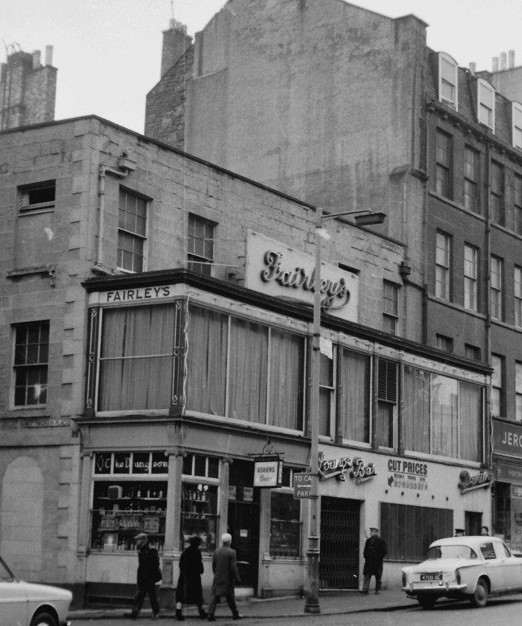
1922—Alan Fairley, the son of a spirit merchant and restaurateur whose family business interests—all on Leith Street; all now demolished—included a couple of restaurants and a dance hall, Fairley’s, with a reputation for rowdiness and closing-time brawls.
Expanding the Fairley empire, Alan bought 10 Picardy Place and converted it from the upmarket Dunedin Assembly Rooms—“the largest and most palatial private ballroom in the city”—to the less rarefied Dunedin Palais de Dance. The opening-week ads promised: “The Happiest spot in Edinburgh. Cosy in Winter, delightfully cool in Summer. TWO LONDON BANDS.” The palais had a “beautiful garden café with a good view of the ballroom” serving “dainty teas and light refreshments”, and was “without doubt the most Popular Afternoon Tea Resort in Town.” An early visitor wrote: “If one enters during a twilight waltz the scene is like one from Fairyland, the multi-coloured ever-changing lights gleaming in fantastic splendour.”
In 1925, Betty Christie, one of the venue’s professional dancers-for-hire, had an affair with a student named Donald Merrett, who funded his dissolute habits by forging cheques in his mother’s name, and murdered her when she found out.
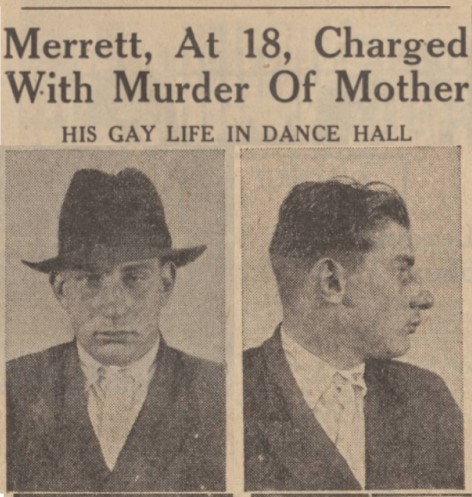
The scandal tainted the reputation of the palais. It’s probably no coincidence that, in the years that followed, Alan filled up its programme with an increasing number of events and dances to raise funds for worthy local causes.
A fire gutted the building in 1933, making possible its quick conversion into a parking garage. Alan moved on to larger dance hall interests and ended up a joint-chairman of the Mecca chain. He died in 1987.
1908—Catherine Laidlaw, who was back living with her parents after being deserted by her husband in what one newspaper called “a sad drink story.”
She had met James McRobie in 1892, when she was a stewardess on a Leith–Copenhagen steamer and he a law clerk, recently graduated from Edinburgh university with degrees in arts and law. He got a job as a teacher in South Africa, “but soon gave way to drink and lost situation after situation,” so they returned home. He found work as a solicitor but “was constantly under the influence of drink and frequented the very lowest company” and was dismissed within a year. In 1902, James went back to South Africa as a trooper with the Scottish Horse. He lasted six months. Thereafter, Catherine received letters—but no money—from various addresses as he drifted from town to town, homeless and rarely employed.
Catherine eventually divorced him and married a ship steward named William Donaldson, perhaps someone she knew from her years at sea. She died in 1963, from heart failure, at the age of 89.
1888—Hermann Bendzulla, a tailor who set up his own small business in his flat after the death of his employer, William Tregilgas, whose widow, Sarah, he married.
1875—Dr Gibson, the last owner of the house before it was broken up into flats. Foreshadowing its eventual fate, the advert he answered noted that it “could easily be converted into Business Premises, with a large Wareroom erected on the back ground.”
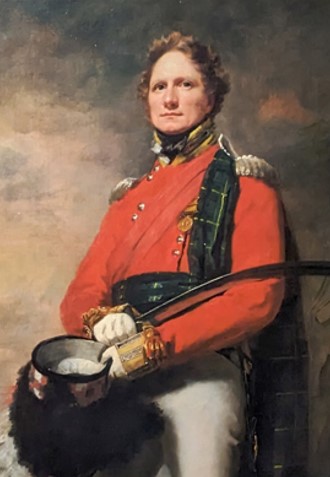
1821—Major James Harvey, who served in Egypt, Holland, Portugal, Spain and France under the Duke of Wellington (his portrait, by Henry Raeburn, hangs in the Louvre), and his wife, Margaret Harvey, who gave birth to three children in the house in the early 1820s (none survived infancy).
Margaret’s father, a slave owner with sugar plantations in Grenada, had died in 1820, leaving Margaret the plantations and sufficient slave-generated income to buy 10 Picardy Place. He also left her a half-brother and two half-sisters—children he’d had with his enslaved housekeeper, a woman called Capon. (The girls received substantial legacies in his will, on the condition that they marry white or free mulatto men. Capon received her freedom, £18 a year and a house.)
When slavery was abolished in 1833, James and Margaret applied for compensation for the 299 slaves they owned. They were granted £8,462—worth almost £1.5 million today—which helped sustain them in comfort until their deaths in 1849 (James) and 1843 (Margaret).
1815—Miss Potts, who ran a boarding school in the building, “where the different Branches of Education are taught … and every attention paid to the young ladies entrusted to her care.”
1812—Mrs Thomson, who won a Caledonian Horticultural Society prize for wine made from white currants grown in her back garden. The bottle’s label read, “Ce vin d’Ecosse/Merite quelque chose.” (A loose translation that preserves the rhyme might be, “This Scottish wine/Is really rather fine.”)
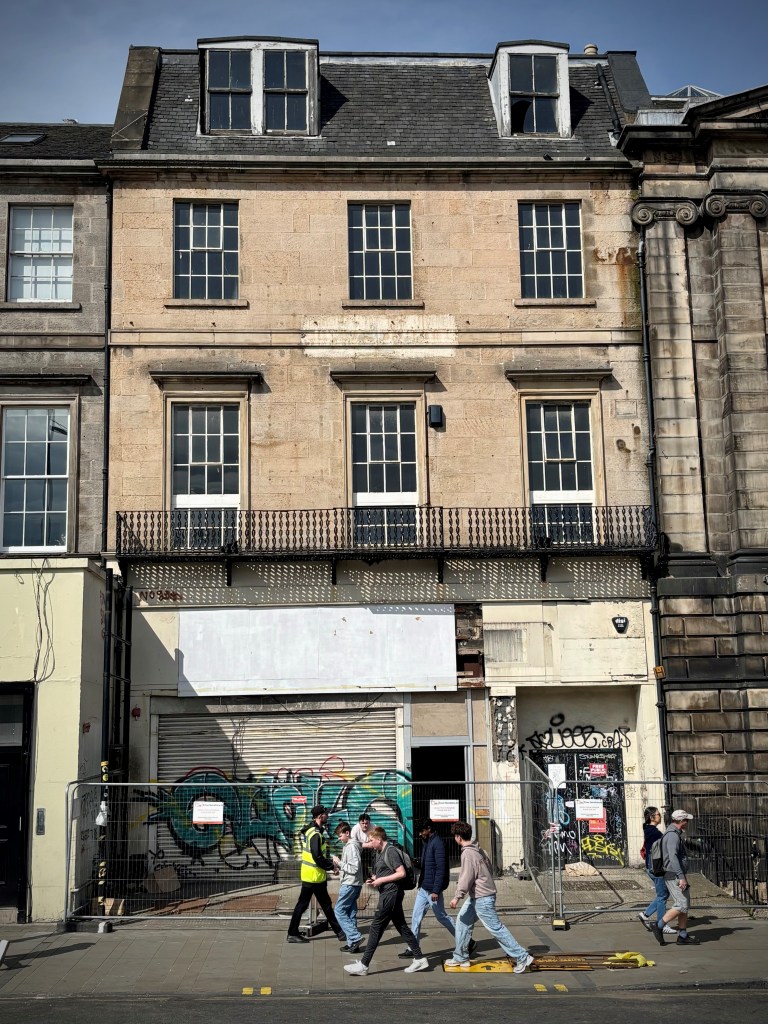
Since Hertz moved out, 10 Picardy Place has stood empty for a few years, but planning permission has now been granted for a 51-bed hotel with a courtyard that, we are assured, is “a reference towards the former rear garden that once served the main townhouse.”
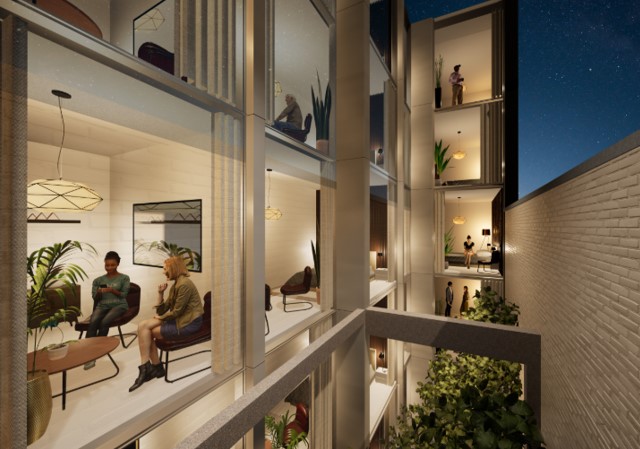
Perhaps the bar will serve white currant wine.


Once again, good research and good history, thanks.
LikeLiked by 1 person
Wow! Edinburgh is the birthplace of the Walnut Whip!
LikeLiked by 1 person
An unusual one. And yes, the Walnut Whips!
LikeLiked by 1 person
Another hotel may not be many people’s first choice for this building, but that’s way better than it lying empty. I was looking at it just the other day wondering about its history. And as always it’s fascinating.
LikeLiked by 1 person