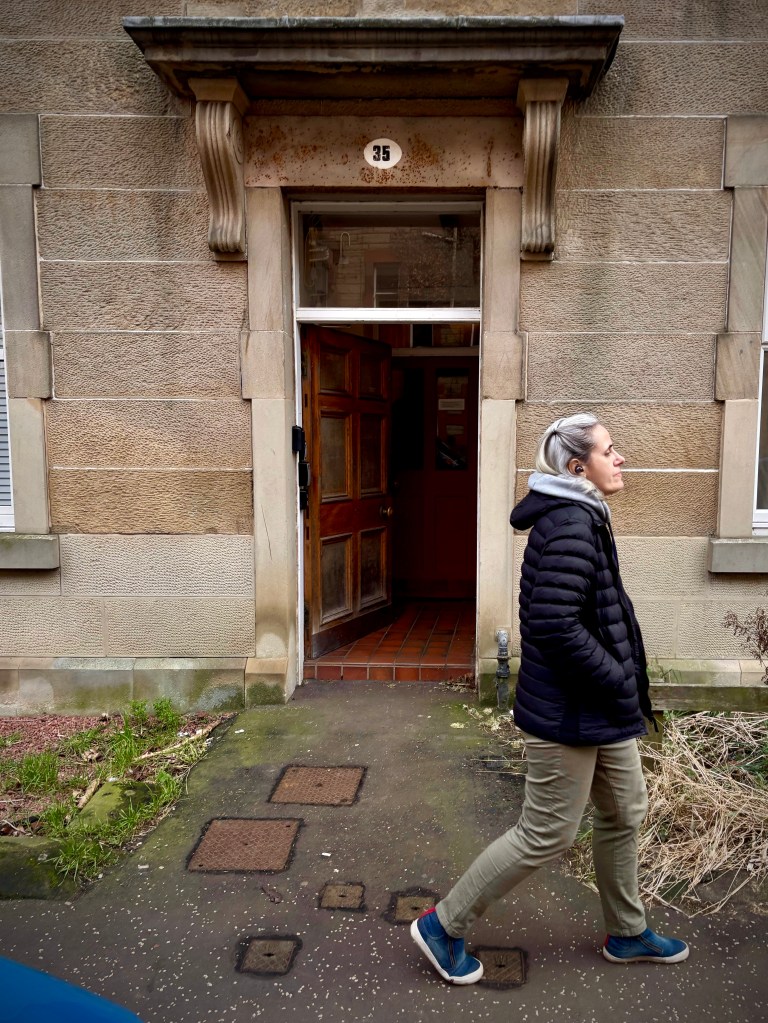
35 Watson Crescent, Edinburgh—16 flats in a tenement built along the Union Canal in 1898 for workers in the nearby foundries, breweries and rubber factories. Former residents include:
1970—Bertha Gatley, who had worked as a domestic servant before marrying William Gatley, a water works labourer, just after he joined the Royal Scots at the outbreak of the Great War. When he returned, they set up home in a Fountainbridge tenement, where they soon had a son.
In the early 1930s, the family moved to the Whitson council estate that had been built in the grounds of the abandoned Saughton Hall Asylum (a crumbling baronial mansion, visible from the end of their street). William—who had survived Passchendaele, the Somme and the Arras offensive—died of tuberculosis a year after they moved in, aged forty-seven. Bertha moved back to the Fountainbridge area, ending up in Watson Crescent, where she stayed for the rest of her life.
In January 1970, when she was seventy-six, she was found unconscious in her flat, badly beaten, her jaw broken. She remained in a coma for days.
A month later—after a Colibri table lighter that had been stolen from the flat turned up in a pawn shop—police arrested a thirty-four-year-old man named James Watson, who was already serving a life sentence in Saughton prison for the murder of a prostitute in Glasgow in 1959.
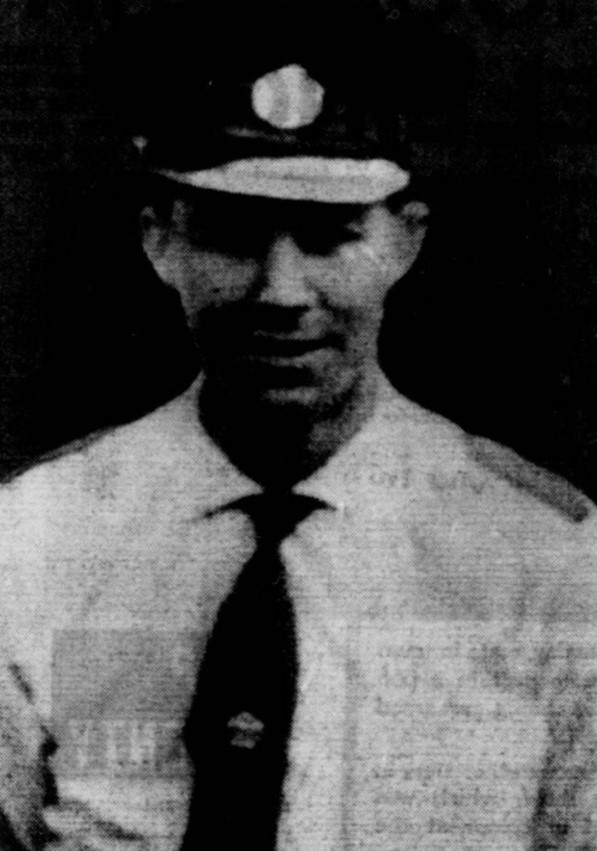
He had been working in a Fountainbridge dairy as part of a training for freedom scheme, and often drank in the Diggers pub before returning to jail at night—his workmates knew he was in for murder, but allowed him to drink with them as he’d told them the victim was a policeman.
After a long drinking session—his shift had finished before 5, and he knew he wouldn’t be missed for hours—he had forced his way into Bertha’s flat and assaulted her before making off with what the judge at his eventual trial called “pathetically few” articles, and £6 in cash.
Watson—who, by some probably meaningless coincidence, shared his name with Bailie James Watson, after whom the street was named—was given a 12-year sentence. He was paroled in 1998 but convicted of drink driving the following year and returned to jail, where he may still be.
Bertha died in 1973, aged eighty.
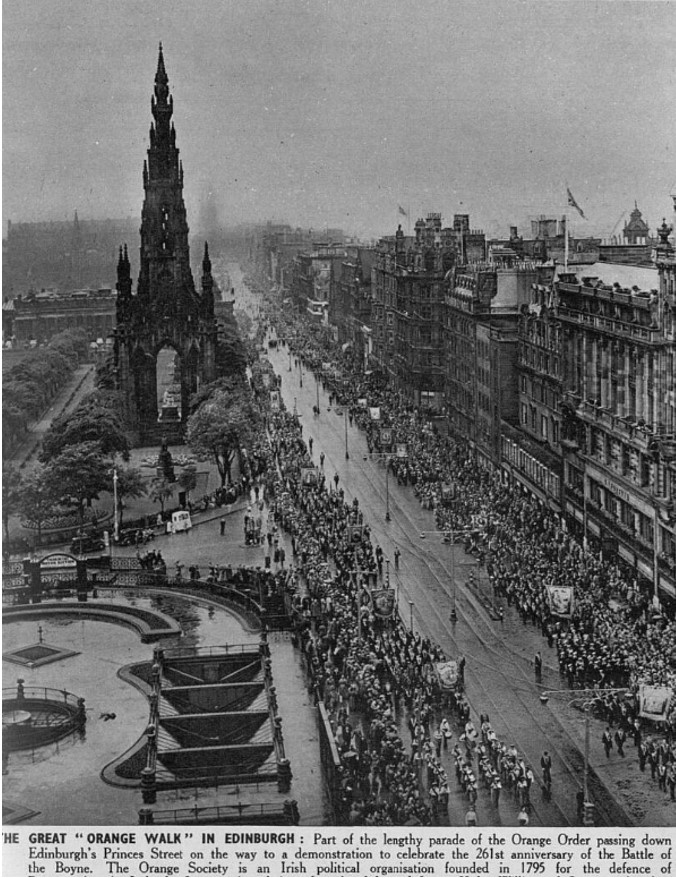
1951—Stanley Archibald, who witnessed the first Orange Walk in Edinburgh since 1902, attended by around 60,000 marchers from across Britain and Ireland, and told the Evening News, “Never before have I witnessed such a crowd of fanatics as I did in the Orange Walk.”
1946—William Scott, a fifty-three-year-old drapers assistant, who was admitted to hospital suffering burns to his feet following a fire in his flat. The burns caused blood clots in his legs, one of which killed him three years later, when it broke off and became lodged in a lung artery.
1940—John Scott, the nine-year-old son of William (above) who died in the Sick Children’s Hospital with an abscess on his lung.
1936—Margaret Scott, the forty-five-year-old mother of John (above) who died of cervical cancer when her son was five.
1932—David Bisset, a young man who, with his friend Duncan Macpherson from no.40, cycled across West Lothian on a late summer Sunday. They were arrested in Linlithgow High Street at 11pm for cycling without front lamps and given a 10s fine, or ten days’ imprisonment.
1921—Annie Cruickshank, who stole a lady’s silver chain handbag and 19s from a shop in Prince’s Street, and was fined £3.
1918—John Hill, a lance corporal in the Oxford and Bucks Light Infantry (and brother of William Scott, above), who died in Bulgaria, possibly of influenza, a month after the end of the war.
1918—Thomas Smith; W Scott; Charles Younger—all killed in action in France between April and March.
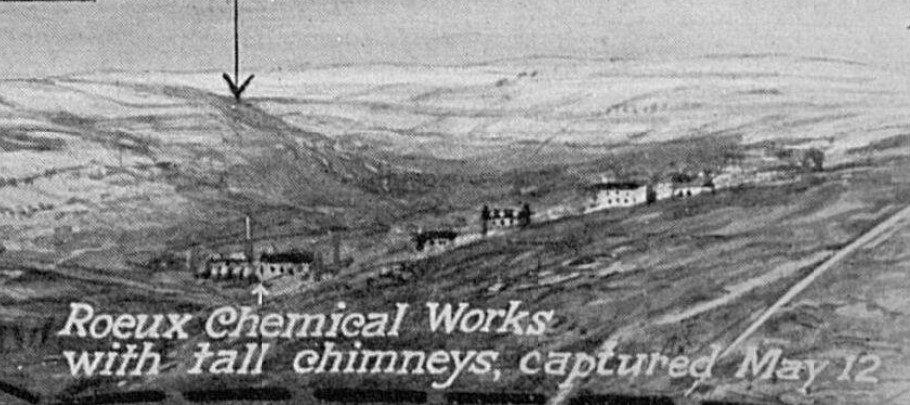
1917—Walter Myles, a thirty-eight-year-old barman who enlisted in the Royal Scots and was killed in “a devastating wave of machine-gun fire”, along with most of his battalion, while trying to capture a small chemical works near Arras.
1915—Duncan Scott, who grew up in the tenement. He enlisted in the Royal Scots in May and was killed later that same month, along with two hundred other soldiers, when their train came off the rails near Gretna and was struck by the Glasgow express.
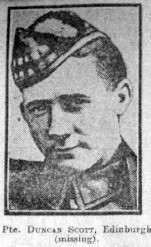
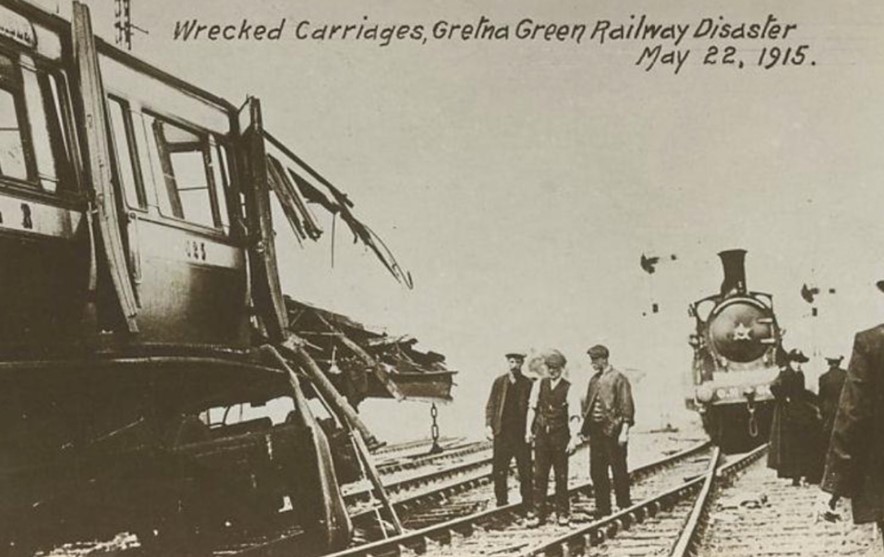
(At least twenty-two men from Watson Crescent were killed in the war. There are thirty-two tenements in the street.)
1912—Richard Ewing, 58, a pipe layer with the Gas Commission who was removing a lamppost that had been knocked over by a delivery van on Comely Bank Avenue when a coal lorry skidded on the steep ice-covered street and crushed him against the iron railings by the roadside.
1912—Andrew Spittal, who took his chickens to the Edinburgh Ornithological Society show in Grindlay Street and won prizes for the best yellow Border hens, and for the best Border bird.
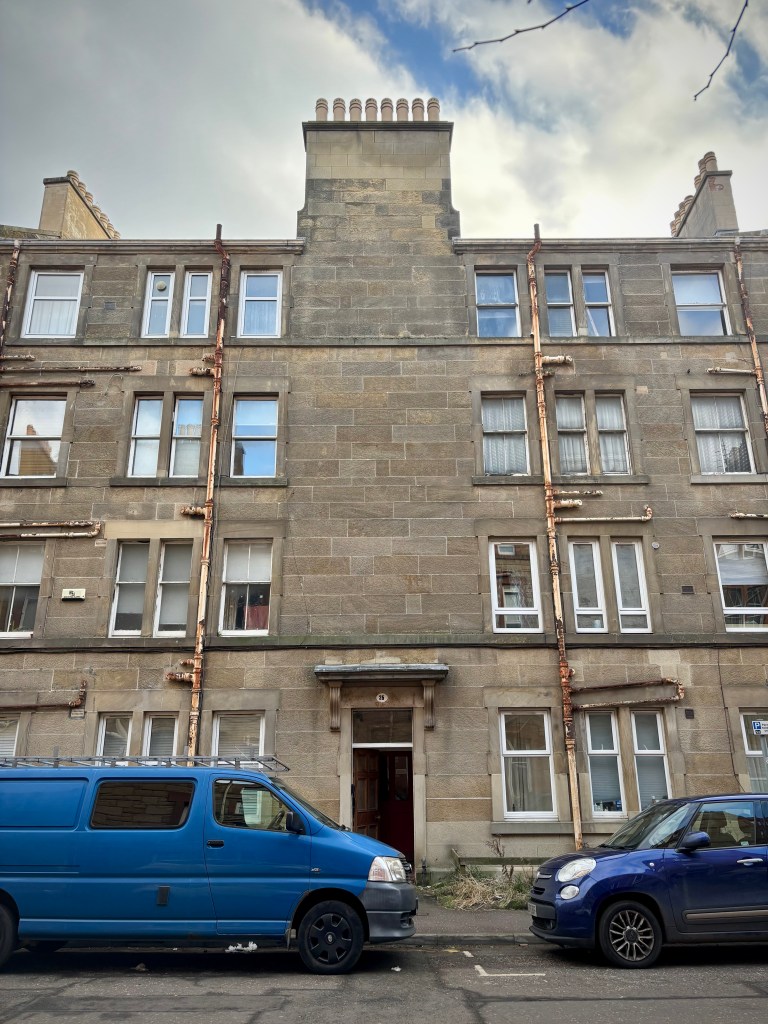
Long before the arrival of the tenements, the lands north of the Caledonian canal that would become Watson Crescent and its surrounding districts were “a rich and beautiful country, studded with villas and gentlemen’s seats”.
Watson Crescent was built on the grounds of North Merchiston House—“long esteemed the beautiful ideal of a suburban villa”—which was demolished around 1880. Its last resident was the architect Charles Hay, who designed many of the Scots Baronial tenements in south Edinburgh.
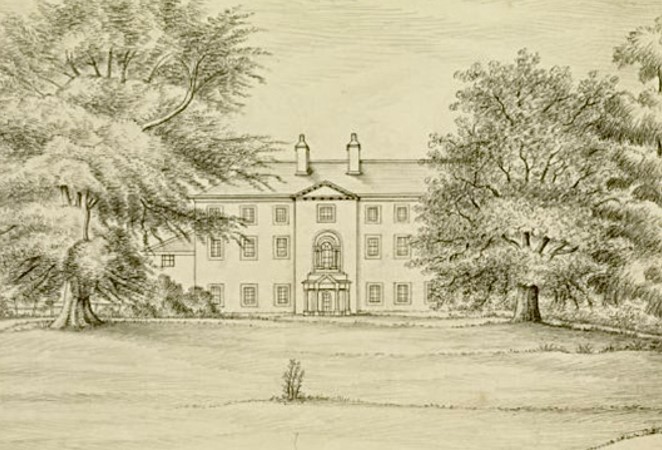
At the southern edge of the grounds, where they met the canal, was a curling pond, which survived for a decade or so after the mansion was sold to developers.
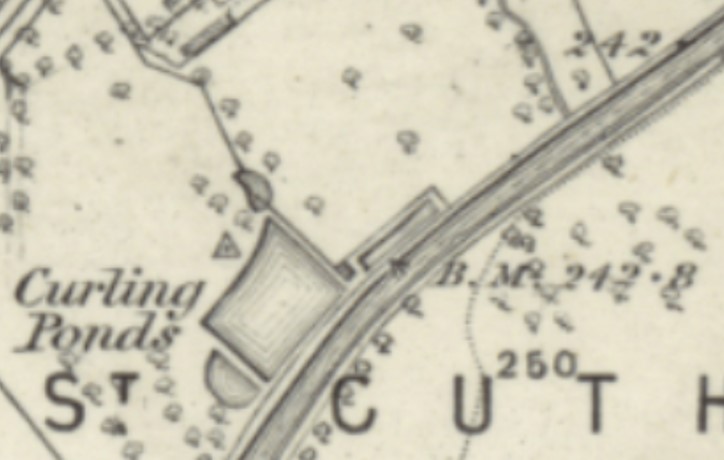

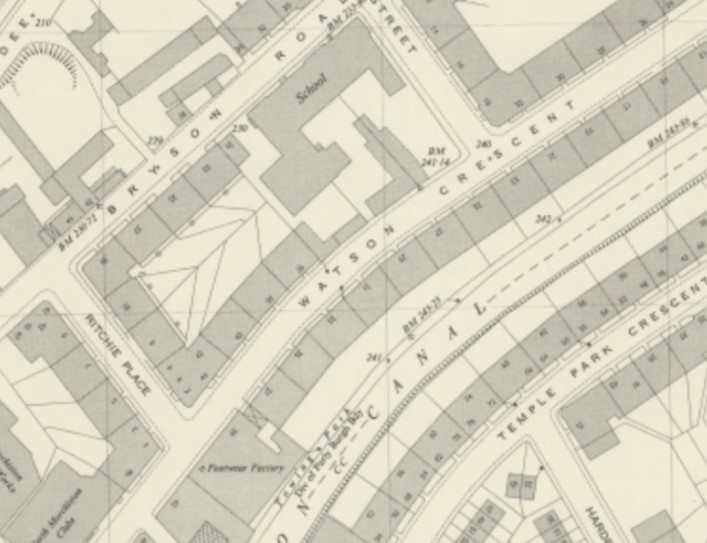
35 Watson Crescent stands in what would have been the pond’s very centre.
 Tenement Town
Thank God for the chickens! The other tales were very important, but it made me so sad. Thank you for such a brilliant stories!JProf June Andrews LLB
LikeLiked by 1 person
I know! This was a grim one. I might do a New Town tenement next…
LikeLike
I’m with profjune on this one.
It’s the unrecorded bits, though, that’s where the good times were.
LikeLiked by 1 person
Great work, but will now make me look at fellow drinkers in Diggers a different way
LikeLiked by 1 person
Bertha Gatley was my grandmother and her 1st born was a daughter (my mother) the son was the second child (my uncle).
I vividly remember to this day the attack on my grandmother. Back in those days there was no security to enter the tenement. Nowadays I believe they do have a key pad with which a number is needed to enter the tenement.
LikeLiked by 1 person