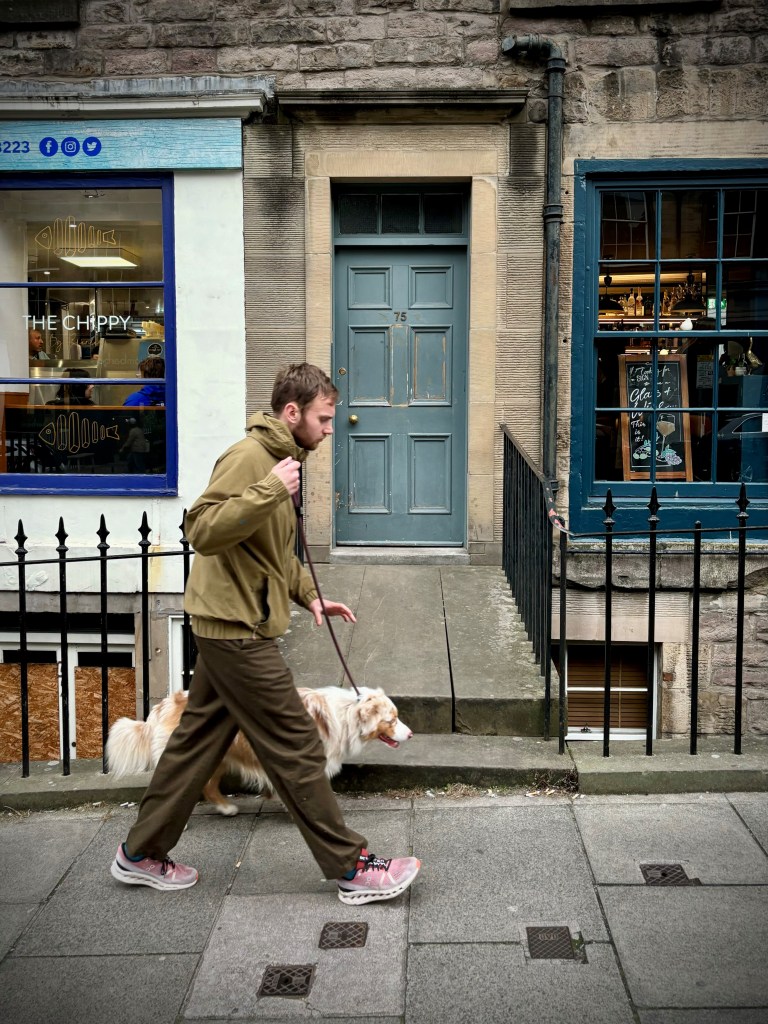
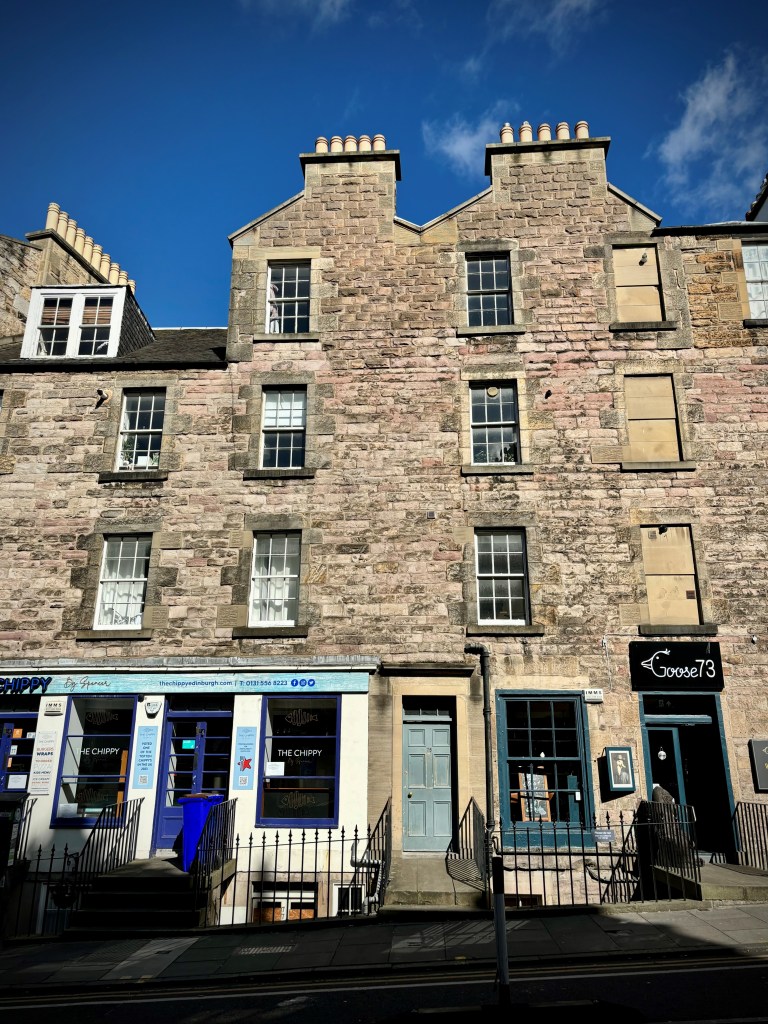
75 Broughton Street, Edinburgh—a mid 19th-century tenement, with six flats over two shops, and two basement flats.
Former residents include:
1962—Alice Buist, an elderly woman who answered her door to two boys in their mid-teens, unknown to her, who handed her a newspaper and asked if she knew where the person whose name was written on it lived. When she peered closely at the paper, trying to make out the name, the boys shoved her back into the flat. She tumbled over an armchair and fell to the floor, where she lay as the boys searched her house for money and left, taking her handbag, which contained £4.
1961—George Kinghorn, a twenty-year-old labourer who was fined £5 for committing a breach of the peace, which involved engaging in an affray with a news vendor and two youths one evening in Forrest Road, reason unknown.
In 1991, George was working in the Powderhall dump, shovelling garbage into a 60ft-deep refuse pit, when a reversing truck knocked into him and he “plunged screaming to the bottom”. His fall was broken by a 20ft-high mound of rubbish, and he survived with minor physical injuries and a somewhat haunted look.

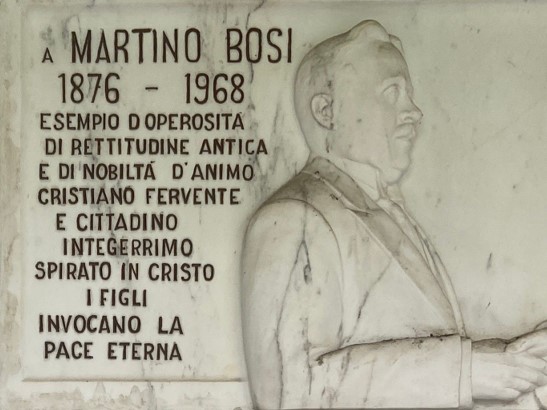
1944—Giovanni Bosi, one of the Scottish-born sons of Martino Bosi, who opened a fish and chip shop on the tenement’s ground floor (now “The Chippy by Spencer”). He was serving as a British Army interpreter in northern Italy when he was killed in a skirmish, aged twenty-four. He was buried in a military cemetery in Arezzo. After the war, his remains were exhumed and placed in the Bosi family vault in Borgo Val di Taro, near Parma.

1940—Primo Bosi, Martino and Maria’s eldest son, who, in the 1930s, was led by an understandable attachment to his parents’ native land to become an expatriate member of the Italian Fascist Party, a decision that led to complications later.
In June 1940, when Italy entered the war, rioting mobs attacked Italian-owned businesses across the city, focusing on the area around Leith Street and Broughton Street, home of the Bosi family and many other Italians. The following morning, the Evening News said: “It looked as if a series of heavy bombs had fallen. In Italian premises, not a scrap of glass remaining in single or double windows; furniture broken; window frames and dressings destroyed.”
Primo, defending his fish and chip restaurant on Union Place, had been caught up in street fighting and arrested. Police searched his flat and found an unlicensed German pistol, 97 rounds of German ammunition and evidence of his membership of the Partito Nazionale Fascista.
He was in danger of being interned as an enemy alien, but the sheriff said, “I have great friends who are Italians who are above suspicion. I regard it as deplorable that because people are of Italian extraction they should be the object of any antipathy.”
The usual fine for possession of an unlicensed pistol was 10s. Because of the “quite extraordinary” amount of ammunition in Primo’s possession, the sheriff doubled it to £1, and Primo was free to go upon payment.
Primo sold his restaurant in 1955. By the 1960s, he was the proprietor of the Fountainbridge branch of the St Cuthbert’s Co-op. He died at home in Morningside in 1977.
1940—William Roxburgh, crewman on the Ocean Drift, a Newhaven trawler that sank in the Moray Firth when it was rammed by a Royal Navy destroyer. Two of William’s shipmates drowned, including a deckhand who had survived an attack on his boat by a Nazi plane some weeks before.
1937—Margaret Ireland, twenty-eight years old, who went shopping one evening and did not return home. “5ft 5in, dark brown hair, grey eyes, wearing a blue raincoat, grey skirt, a yellow sports jumper, and black lace-up shoes”, ran the police alert.
She was found a week after she went missing, perfectly safe. She’d simply left her husband John, a lorry driver and chronic alcoholic, who was intolerable.
Three years later, she was living in the Salvation Army women’s hostel in the West Port, and John, who had recently been fined for being drunk and incapable and for stealing clothes from houses in Falkirk and Edinburgh, was dead—a heart attack at the age of thirty-one.
She married David Gourlay, a docker, in 1948, and died in their council flat in 1966, aged fifty-seven, of kidney and heart failure—“caused by obesity”, noted the doctor who examined her body.
1932—Lawrence Henderson, 54, who, while alighting from a bus in York Place, tripped and fractured his skull.
1932—Alexander McGill, a four-year-old boy who, while playing on the pavement outside the tenement, ran on to the street and was knocked down by a car.
1925—David Garrow, 63, a cab driver, who collapsed in Waverley station, vomiting blood, and was taken to the infirmary, where he died.
1917—Mary Player, who, at nineteen, married Peter Laing, a newly enlisted private in the Army. Their marriage, after his return from France, was unhappy, and she soon moved back in with her parents in Broughton Street.
Her parents’ lodger, Benjamin Herdman, a childhood friend of Mary’s, proposed to her after she was divorced. She refused, as marriage meant only misery to her, but, in 1928, Mary accepted a ring from him and moved into his room.
They lived there as husband and wife until Benjamin’s death in 1954, and Mary remained in the flat with her father, until she died in 1963.
1915—Martino Bosi, who came to Scotland around the turn of the century and had been running a fish and chip shop in the tenement for some years when he was sentenced to 60 days’ imprisonment for buying 3lbs of tobacco that some railway workers had obviously stolen from a train.
On appeal, his sentence was reduced to a £10 fine, partly because Italy had entered the Great War on the British side and Martino had received call-up papers from the Italian Government.
After the war, Martino continued to run the fish and chip shop. He eventually returned to his home town of Borgo Val di Taro, where he is buried, alongside his wife and his son Giovanni, in the family vault.
1912—William Millar, who ruined his tailoring business and marriage through “outrageous behaviour when drunk”, vocal threats of suicide and murder, and fornication with a woman, Maud Lister, to whom he was not married but with whom he shared a flat in the tenement.
1871—John Sheridan and Zoe Simeon, theatrical artistes who resided in the tenement when they weren’t touring the provinces and London at the head of their own troupe, or appearing in leading roles in various stock companies in Cardiff.
Zoe was known as “a distinguished Scotch actress”, while John was “an actor of the first rank” who possessed “a style free from all conventionality, and a rich, clear, well-modulated voice and perfect accentuation” and enjoyed “a measure of popularity which comes to few men”.
John retired when Zoe died—in 1909, at the age of 67—and died soon after, aged 70. “The death of his wife 18 months ago came as a shock from which he never fully recovered, and he had been confined to his room for some months before his death, which was directly due to dropsy.”

1859—Margaret Pae, recently married, who gave birth to a son, stillborn. Her husband of one year, David, was a few years into a long career as a writer of serialised novels. “One of the most widely read novelists of 19th-century Britain”, he is almost entirely forgotten today.

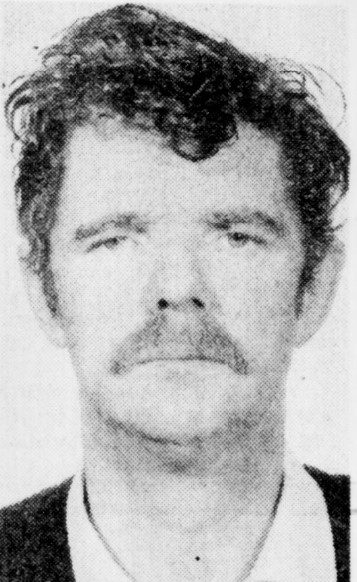
The tenement was the scene of a miserable tragedy in the spring of 1987, when Allan Borwick was beaten to death in the close. His body was found lying at the foot of the “rubble-strewn stairway” by residents leaving for work the next morning.
Allan was a frequently homeless, often unemployed labourer; an alcoholic who had drunk the equivalent of fifteen pints of beer or sixteen whiskies on the day he died. He was well known in the area, and had been seen that day playing his mouth organ in the street.
He’d also been seen, after dark, arguing with a teenager in the doorway of the tenement. It was, of course, the teenager who killed him.
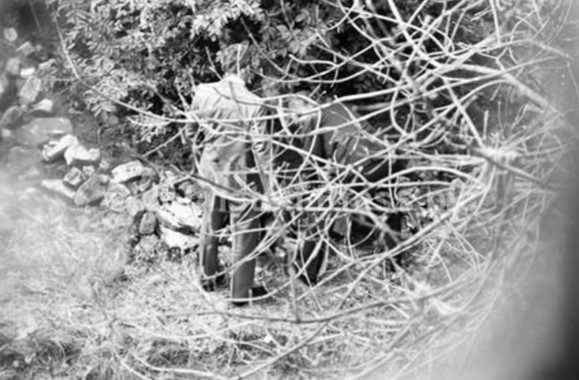
It took police almost a year to make an arrest—the picture below shows detectives fruitlessly searching the back green for evidence. The teenager—just sixteen years old—was turned in by an anonymous caller after an appeal in the Evening News.
He said Allan had attacked him when he had accidentally knocked his fish supper out of his hands, but who knows. He was given a twelve-year sentence and sent to a young offenders institution.
I won’t name him, as his family still live in the city. I think he died, of drink, in 2004. If I have the right man—I think I do—he has at least one child, who left a message on a tribute webpage:
“hello dad i realy doo miss you you tried your hardest when i was younger and im sure you did i good job i always wanted too meet u all my life but i guess i was too late and such a young age i wish if u were stil here then maybe i could off helped u too come off the drin but youve had a hard time and i know your looking over me right now and i know your in a good place i will alway have a photo too remember u so i couldent have asked for a better dad and u dident deserve too dad ily soo much”.
 Tenement Town
Ohn what a heartbreaker of a message from that child. Thank you, Diarmid, for your great work.
LikeLiked by 1 person
So happy to see a new entry today! I agree with Vicki, that message is a heartbreaker.
LikeLike