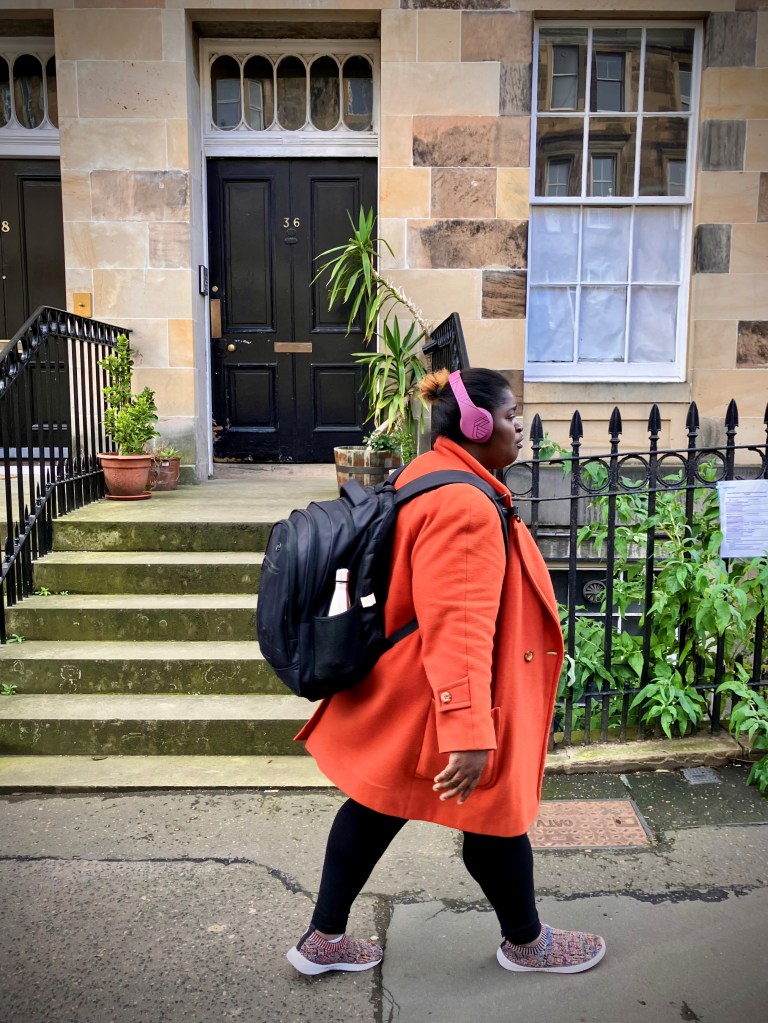
36 Montgomery Street—a corner tenement built around 1825 to a design by William Henry Playfair. The eight flats in the stair sit above two main-door flats and two basement flats—one of each on Windsor Street and Montgomery Street.
Former residents include:
1976—Catherine Wilkinson, a cabaret artiste (stage name Patsy), who lived in the basement flat, 31a Windsor Street, with her partner, her children and Benjamin, her 150lb lion.

Benjamin, was a year old, “about the height of a Great Dane, although wider around the beam” and had been hand-reared from birth. Catherine had bought him from a circus a couple of months after he was born and had him declawed a month later.
He spent a great deal of time in the flat, playing with the children and watching TV—“He thinks he’s one of the family,” said Catherine. When he went out into the back green to relieve himself, he was tethered with a sturdy chain.
However, naturally enough, the neighbours were alarmed by the presence of an “unpredictable wild animal” in their vicinity. One, Anna Pacitti, was terrified when Benjamin raised himself on his hind legs to peer at her over his wall while she hung her washing in her back green.
(This is a view of the green from the lane. Benjamin would have been in the part with the tree; Anna would have been hanging her washing in the section between that wall and the fence in the foreground. The gate between those sections, open in this picture, would have been padlocked shut.)

Eventually, someone among the neighbours called the police. When two officers arrived and entered the back green, Benjamin growled at them. Catherine told them it was because they were wearing hats, which Benjamin didn’t like. They removed their caps, and Benjamin calmed down.
Nevertheless, Catherine was charged with allowing the animal to go at large without being under proper care, restraint or control, and with recklessly disregarding the lives and safety of the public.
In court, Catherine said, “He is very even tempered. I have taken him in crowds and to shows, and he has never bitten anyone. We took him for walks to a farm, and he was dead scared of sheep—he wet himself when he saw a lamb, and hid his eyes with his paws when he saw a horse.” He was, she said, “a very cowardly lion.”
Catherine was cleared of the charges, although the sheriff said he had a great deal of sympathy with the neighbours. He also expressed a great deal of sympathy with Benjamin, “tethered by a chain around its neck by a padlock, and the target of empty beer cans and banana skins.”
But Benjamin was no longer in that position, as Catherine—who had found it impossible to comply with the interim order not to allow the lion out of her house, even to defecate—had sold Benjamin to another circus before the trial. He was “not too happy” there—he missed his family—but Catherine visited him every Sunday, and reported that Benjamin seemed to cheer up when he saw her.
(Sidenote: the previous year, a puma that lived in the Merrymaker pub, 1 Commercial Street—where it “hissed and spat at the customers all night” and was allowed to roam the floor at closing time—attacked and wounded a young woman. The publican was fined £150 and the puma was rehomed.)
1956—Susan Davidson, who was punched several times in the head by Walter Muir one night in Elm Row. She asked police to take her home, to the flat she shared with Walter. After the police left, he arrived home, too, and beat her again. He was fined £7 in court the next day.
1955—George Fielding, bookmaker, who, with his friend Tommy Brown—a footballer who had played for Hearts during world war 2, until he stopped because he was “run down, nervous and suffering from scabies”—stole two twinsets from a ladies outfitters in Hawick.
1941—John George Flett Moodie-Heddle, lawyer, amateur historian and author of a guidebook to Orkney, who proudly claimed direct descent from Robert the Bruce on the paternal side and Harald Mac Mudah, one of the last Orcadian Jarls, on the maternal side.
1919—Gilbert Gray, 21, an army cook who came home from the war suffering headaches, irritability and fatigue—shell shock, it was assumed. Only when he died was it discovered that he in fact had an infection of the inner ear, which, untreated, had poisoned his brain.
1915—James Hutchison, who got a job as a billiard marker in the Scottish Unionist Club and immediately stole two overcoats and a watch from the cloakroom. The watch was given to a friend, the coats taken to a pawn shop. He was caught and fined £1.
1907—Euphemia McArthur, a four-year-old girl who, while walking with her mother and grandfather in Lothian Road, darted into the street and was knocked down by a tram, which was able to stop just before the wheels passed over her body.
1902—Daniel McClinton, an ex-soldier (twenty-one years with the Highland Light Infantry) who lived with his wife in the basement flat, 31a Windsor Street, completely unaware that the rooms where he slept, ate and polished his medals would one day be home to a lion.

Physically, he was “rather under the medium height, with hair turning grey, thin on top, an iron grey moustache and small Imperial beard.” By his general appearance and bearing, he was “as unlike the usual conception of a murderer as it is possible to imagine”, yet that was what he became.
He was a porter and general servant at Surgeons Hall, where his employers described him as “an extremely intelligent man, very trustworthy and, in fact, the best servant we ever had.” His duties included “cleaning up the laboratory and going messages.”
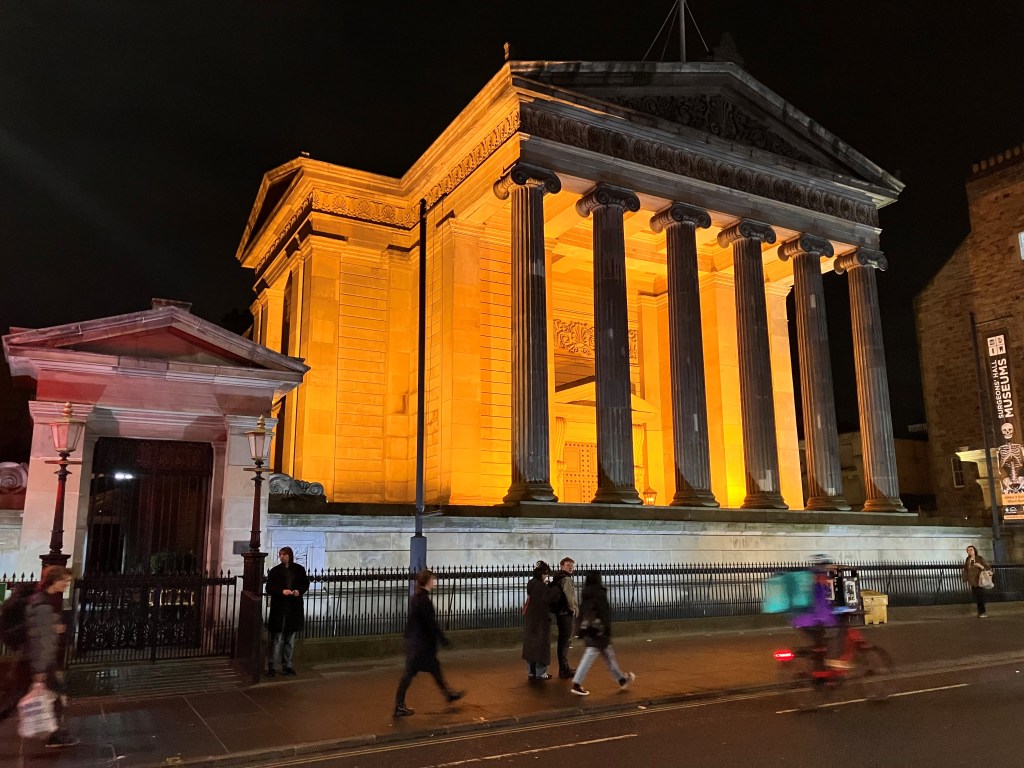
However, over the course of a couple of years, his behaviour had grown strange. He would sit and mutter to himself, twirling and twitching his moustache and “giving way to groans”. He told his wife of a widespread conspiracy against him, and his enemies’ plans to deprive him of his army pension.
In particular, he developed a grudge against William Ivison Macadam, an eminent scientist and colonel of the volunteer regiment of which McClinton was a member, who lectured and conducted experiments in Surgeons Hall.
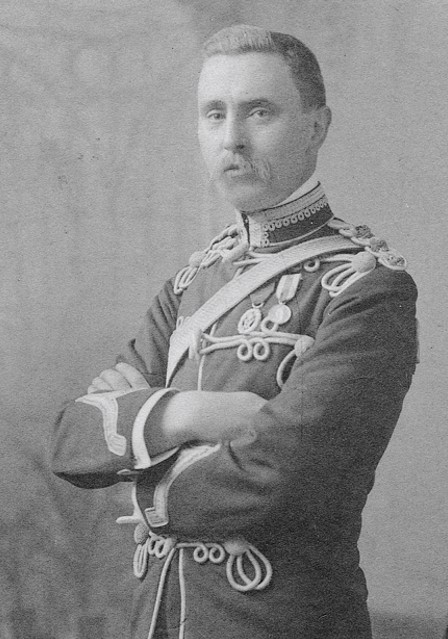
McClinton believed Macadam was “trying to do him an injury, damage his character and trick him in various ways” and was laying traps for him and paying spies to watch him. He would sink into surly moods for days when Macadam even slightly reprimanded him.
One June morning, Macadam—dressed in full military uniform, as he was about to board a ship to travel to London to take part in the coronation of King Edward VII—was experimenting with the flashpoint of oil in the laboratory in Surgeons Hall. His brother, Stevenson, was with him.
McClinton entered the room, carrying his rifle. Macadam and his brother glanced up then returned to their work. They were used to seeing McClinton with a gun, as he often practised at the rifle range in Holyrood Park before coming to work. He was known to be an expert shot.
Without warning, McClinton shot Macadam in the back. A moment later, he shot him again. One bullet punctured his heart, the other his lung. He died more or less instantly.
McClinton said to Stevenson Macadam, “Stand where you are—I won’t shoot you, but if you interfere with me, I will.” He then turned to a laboratory assistant, James Kirkcaldie, spoke his name and fired at him. Kirkcaldie ducked behind a bench and the bullet hit the wall.
A telephone rang in a neighbouring room. Stevenson gently asked McClinton to answer it. He replied, “I’m damned if I will!” Stevenson said he would answer it himself, and began to walk slowly to the door. Just then, a medical student, James Bell Forbes, entered the room. He was smiling, apparently unaware of what was going on.
McClinton shot him twice. One bullet hit a major artery, causing “a fatal effusion of blood”. McClinton said, “There’s another of the same lot. That will keep him from jumping about for a while.”
Stevenson, again speaking calmly, asked McClinton to hand over the gun. He replied that there were two others he wanted to “get level with”—the janitor and another porter—but admitted that he felt satisfied with what he’d managed to do. He unloaded the gun and gave it to Stevenson, then sat down on a bench and waited for the police.
McClinton was found guilty of culpable homicide and sentenced to penal servitude for the rest of his natural life. After a spell in Peterhead, he was found to be insane and was sent to the Criminal Lunatic Department of Perth prison, where he died of cancer in 1923, aged sixty-seven.
1896—George Sawers, a cab master who, over the years, had been arrested for driving recklessly in Princes Street; driving while drunk; assaulting a police officer; being so drunk that he fell off his cab in Grindlay Street and nearly killed himself; assaulting his wife for accusing him (correctly) of being unfaithful; public affray on Portobello beach; assaulting a woman in a stair in Rose Street; stealing a gold watch from a drunk passenger; and various other crimes.
One November night, after he was admonished for being drunk in charge of his cab again, he went home, got drunk and cut his throat with a razor, “with a good deal of affliction”. He survived and, charged with attempted suicide, was fined £5 to ensure his future good conduct. He died of acute alcoholism two years later, aged forty-five.
1893—Sarah Chisholm, a young girl who won first prize for her geranium in the Working Men’s Flower Show at the Corn Exchange.
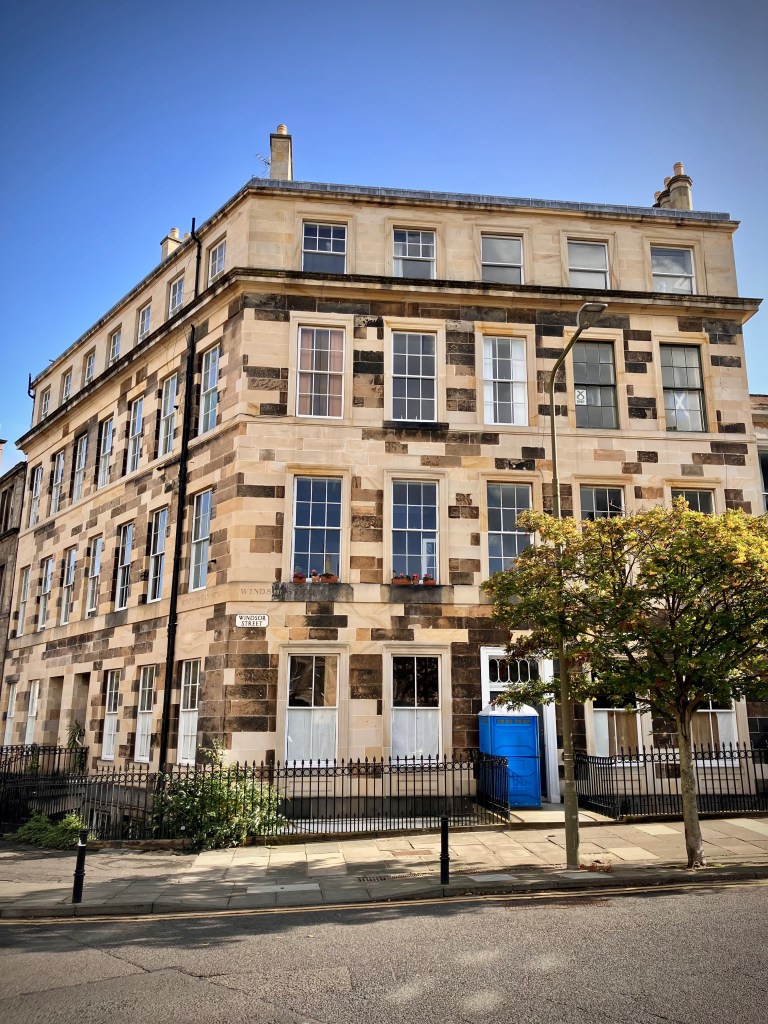
In the late 1830s, not long after the tenement was built, financial complications stopped work on the planned streets that made up Playfair’s Calton scheme, of which it was a part. For the next thirty years the building stood at the edge of the developed city, facing a stretch of largely rural land to the north-east, with acres of fields and country lanes leading down to the shore of the Forth.
The lion, we can be sure, would have loved it.
 Tenement Town
Very enjoyable stories ! A bit gruesome wow the man with the rifle !
The lion –
Poor beast & daft owner !
LikeLiked by 1 person
Great stories!
I couldn’t help looking up the Criminal Lunatic Department of Perth: https://www.nrscotland.gov.uk/files/prisoners-or-patients/
LikeLiked by 1 person
Absolutely fascinating stories.
Ps I remember the puma!
LikeLiked by 1 person
I’m not sure if I feel more sorry for Benjamin before or after his eviction! Another great read Diarmid
LikeLiked by 1 person