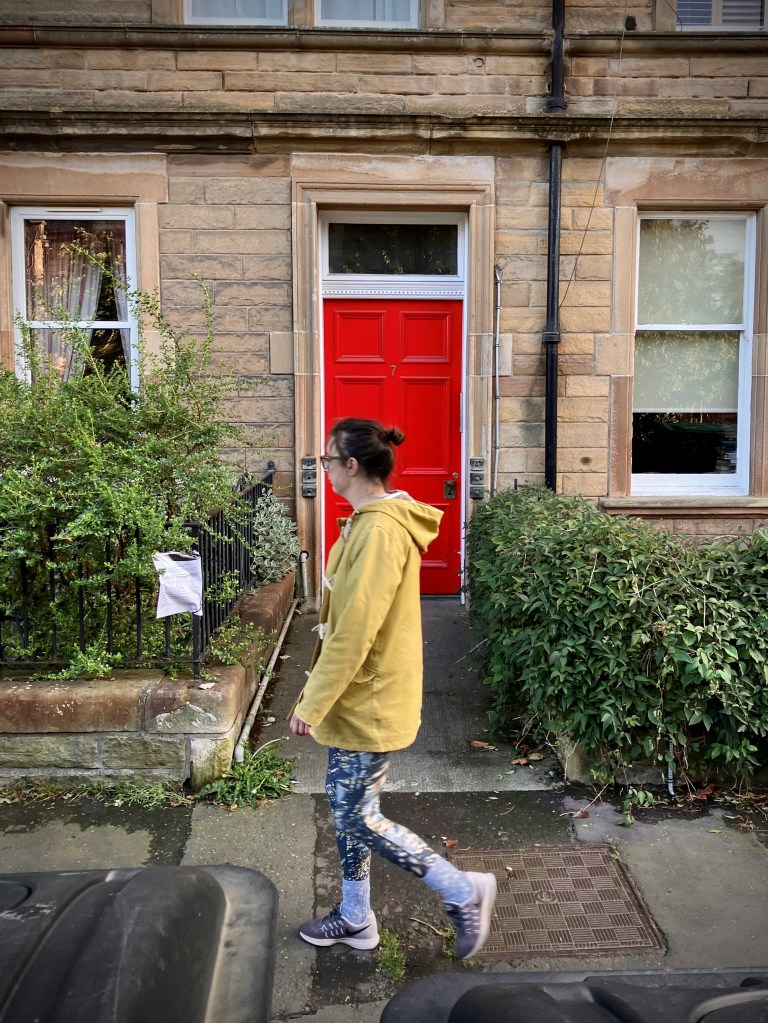
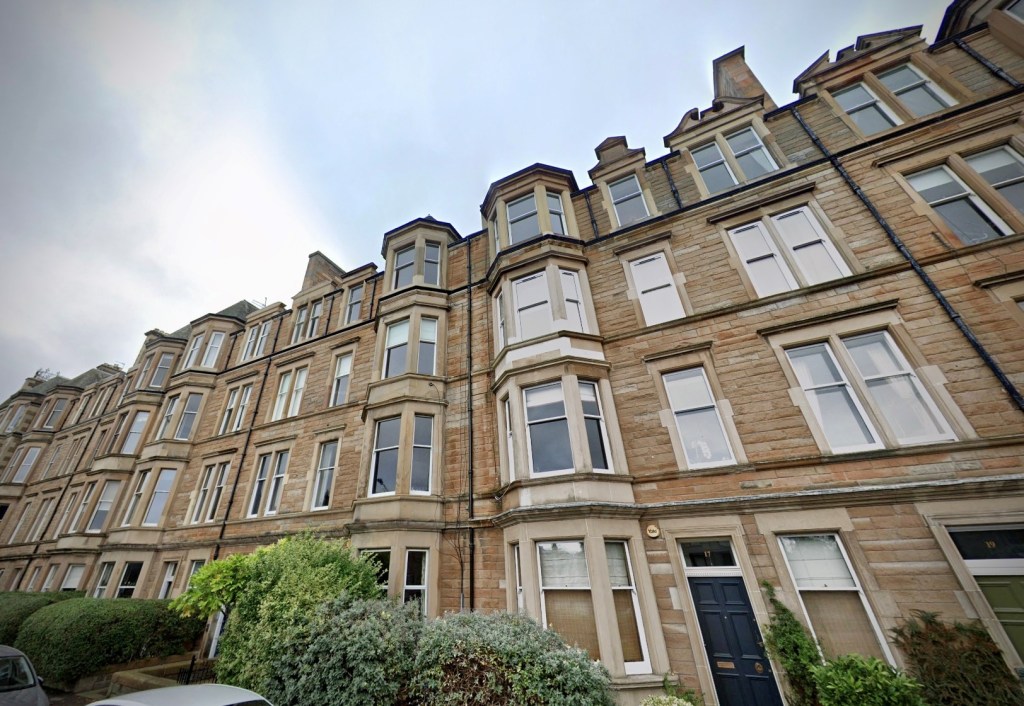
7 Cargil Terrace—built in 1901 on a quiet side street in the north of Edinburgh that is named after some bygone landowner who left no other trace in the historical record. Six flats in the stair, over two ground-floor flats.
Former residents include:
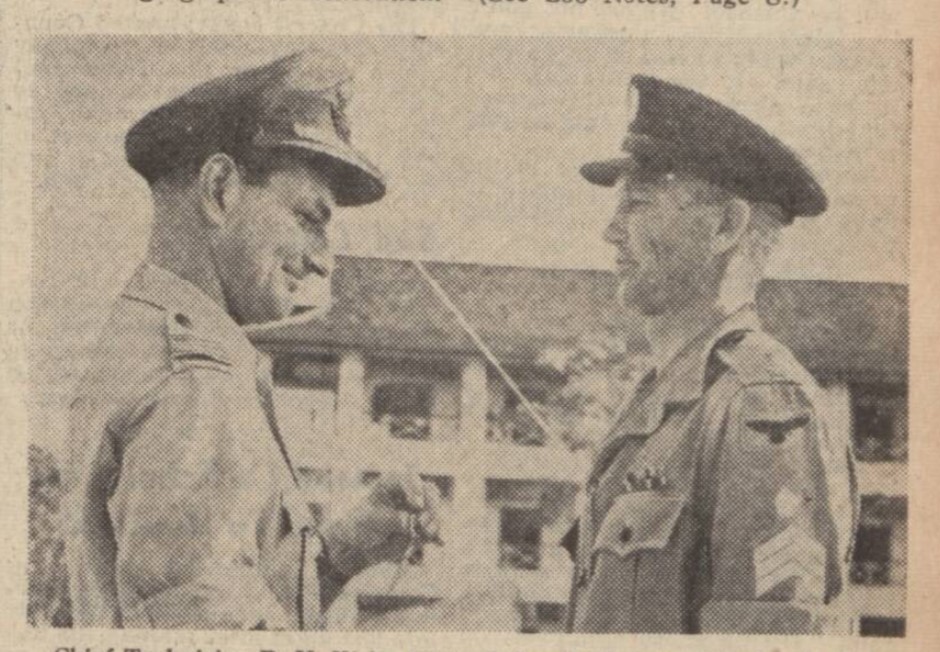
1957—B H Kirby, of the RAF, who was awarded a long service and good conduct medal when he was the chief technician at the Selatar airbase, maintaining jet fighters during the Malayan emergency, which resulted in the death of 18,000 Malayans and the end of British rule. (He’s on the right, below, receiving the medal from Wing Commander A F Fegen, “commander of the only flying-boat squadron in the Far East.”)
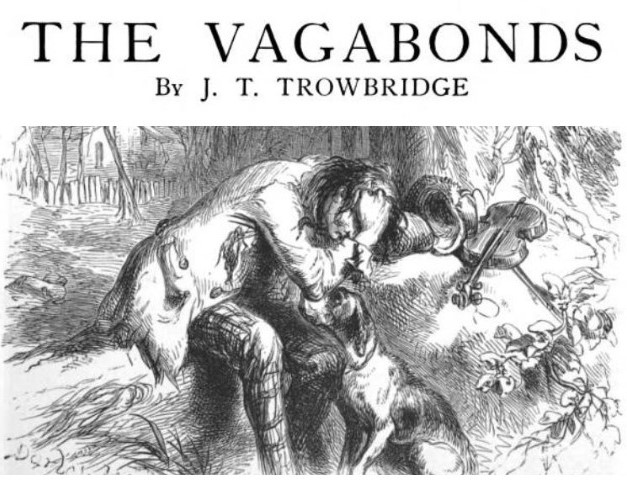
1926—Morrison Love, a chemist and amateur elocutionist, who performed popular poems like “The Vagabonds”, a hobo’s address to his canine companion. A review in the Midlothian Journal said, “So realistic was he in his reading that many of the audience rose to their feet to try to see the dog he was so pointedly addressing.”
Morrison had one child, also Morrison, who, from the age of ten, won various prizes for his piano playing. By the 1960s, he had become a hip young music teacher in Ainslie Park school, where he endeavoured to introduce his pupils to the pleasures that lie beyond the hit parade, saying, “Youngsters should be shown that although there is a lot of dross in pop, it is possible to be selective. If a youngster leaves school at 16 with the idea that his music amounts to Top of the Pops or nothing, then he has not been made aware of the immense variety within music.”
Morrison Sr died in 1972, aged 72; Morrison Jr in 2012, aged 86.
1918—George Davidson, who served as the Danish Vice-Consul during the first world war, a role whose only newsworthy functions appear to have involved attending civic dinners. He perhaps discussed current events with his (upstairs or downstairs) neighbour Peter Clark, who served as commissioner for oaths for the Province of Manitoba.
1913—John Low, a telegraphist in the General Post Office. Born in Perth, he entered the service in Coupar Angus at the age of fifteen and transferred to Edinburgh four years later. In his forties, he married a typist colleague named Christian Stuart. (An unusual name for a woman; people were always getting it wrong and calling her Christina, even on official forms.) The ceremony took place in the Tron kirk, just across North Bridge from the building where they worked.
War broke out a year after the wedding, and John served as a telegraphist with the grand fleet in Scapa Flow and then in the wireless service at various stations in England. He was evidently allowed home on leave, because, in the autumn of 1916, Christian gave birth to a son.
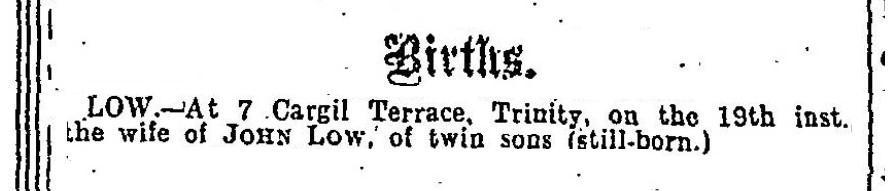
Before the child was more than a few months old, Christian was pregnant again. This time, things didn’t go so well, and she suffered a miscarriage in the spring. It turned out she had been expecting twins. Far too small for their existence to be recorded in the registers of births or deaths, the only sign that they were ever here is the notice that John put in The Scotsman:
The following month, Christian began to complain of stomach cramps and nausea. She died within a fortnight, an inflammation of her stomach lining having spread to her kidneys. She was thirty-six.
John came home to Edinburgh after the war, and was promoted to overseer in the GPO’s telegraph department. He retired at sixty and returned to Perth, perhaps already experiencing symptoms of the liver cancer that killed him, in 1933, aged sixty-five.
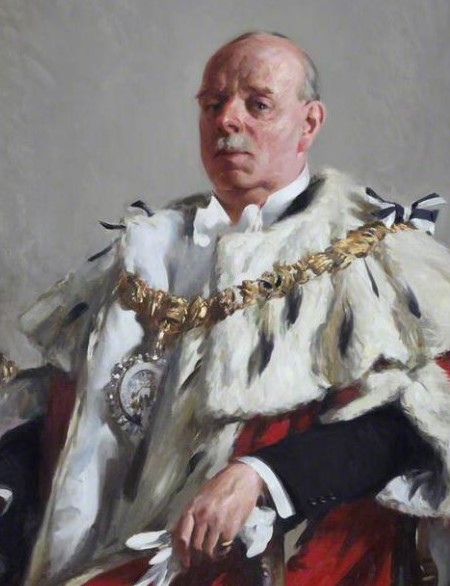
1902—Louis Gumley, who started married life in the ground-floor-right flat. He went on to become a wealthy property agent who served as Lord Provost of Edinburgh throughout the 1930s and was knighted by George VI at a reception in the Palace of Holyrood.
He led the Granton seafront project, building a sea wall and creating a public park from reclaimed land to protect the beaches at Silverknowes and Cramond from pollution that had hitherto been washed down from Granton’s gas and iron works. (His fellow citizens thank him.)
Another of his grand projects was the construction of a road tunnel from Waverley Bridge to the Grassmarket, and the widening of the West Port and High Riggs through the demolition of buildings on each side, in order to create a modern highway through the centre of the city to Tollcross. The plan was never realised. (His fellow citizens thank God.)
Louis—or Sir L S Gumley, as he was known at that point—died in 1941, at the age of sixty-nine, while on holiday in Windermere.
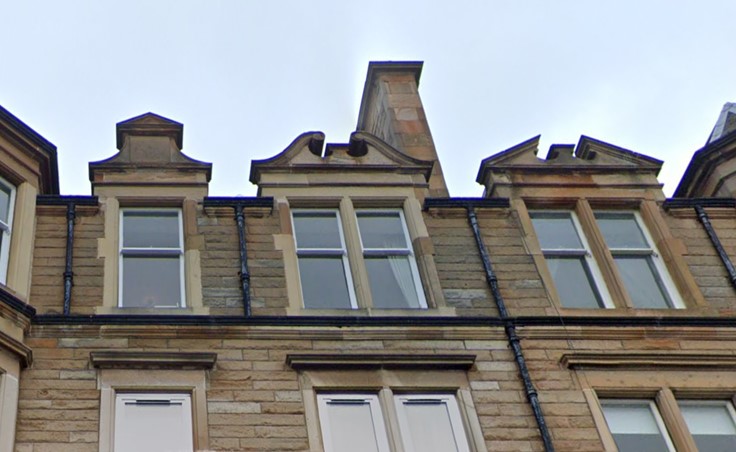
There’s something strange about the roofline of the tenement and its two neighbours on the street, all built at the same time, to the same design. The top windows of the westmost tenement have ornamental pediments, a quietly ornate flourish on the otherwise understated façade…
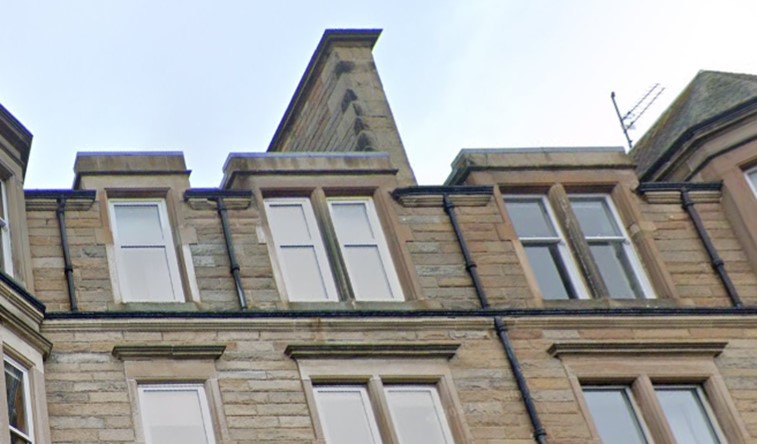
But the top windows of the middle tenement, next door, have only the base stones for similar pediments…

…while the windows of number 7, the furthest east of the three, are capped simply by plain rectangular slabs.
A possible reason for the anomaly is that, on 2 March 1901, a mason named Alexander Auld was setting in place one of the ornamental stones on the westmost tenement when a hand crane swung towards him and knocked him from the roof. He died in hospital a few days later.
It seems that the builder—a local councillor named Finlayson—decided to leave the finishing touches off the other tenements, perhaps as a mark of respect, or perhaps because the feeling on the site was that it seemed wrong to risk men’s lives for unnecessary ornamentation.
Of course, nobody knows for sure. And people pass by all the time without a second thought.
 Tenement Town
Interesting you say that Christian is an unusual name for a female. I would have said the same until I started doing family history and have found many of them ( central belters and NE Scotland) and yes they do end usually end up getting written down as Christina.
LikeLiked by 1 person
I cannot express how amazed I am to read this. As a child I lived at 7 Cargil Terrace. Our flat was on the first floor directly above No.5. In the top floor at the time (late 1960s) lived a former Hibernian goal keeper whose name eludes me. Thank you for this wonderful insight into my former home’s past.
LikeLiked by 1 person
Thanks for writing — it’s always good to hear from former residents of these places!
LikeLiked by 1 person
Very interesting& enjoyable. As ever !
LikeLike
This is fascinating. I’ve always wondered why only one of the tenements has its pediments – I had assumed that the others had been removed at some point for safety reasons. Cargil Terrace was built on the northern side of the grounds of a property called Cargilfield, where in 1873 a preparatory school of the same name was founded by the Rev. Charles Darnell. In 1898 the school moved to Cramond. According to my title deeds, the Rev. Daniel Darnell disposed of the land in 1900.
LikeLike
Glad I could solve (probably) the mystery for you. One mystery remains, of course: who was this Cargil person?
LikeLike